• Home
  • Shop
    • Oscillators
    • VCFs & VCAs
    • Envelope Generators
    • LFOs + Noise
    • Other synth parts
    • Stomp Boxes
  • Articles
    • Projects
    • Synth DIY
    • Stompbox stuff
    • Vintage synths
    • RC Filter Calculator
  • About Us
  • Contact
Skip to content
  • Home
  • Shop
    • Oscillators
    • VCFs & VCAs
    • Envelope Generators
    • LFOs + Noise
    • Other synth parts
    • Stomp Boxes
  • Articles
    • Projects
    • Synth DIY
    • Stompbox stuff
    • Vintage synths
    • RC Filter Calculator
  • About Us
  • Contact

Category: Stompbox stuff

Digitech PDS-1550 Programmable Distortion pedal analysis

Posted on November 22, 2018October 5, 2020

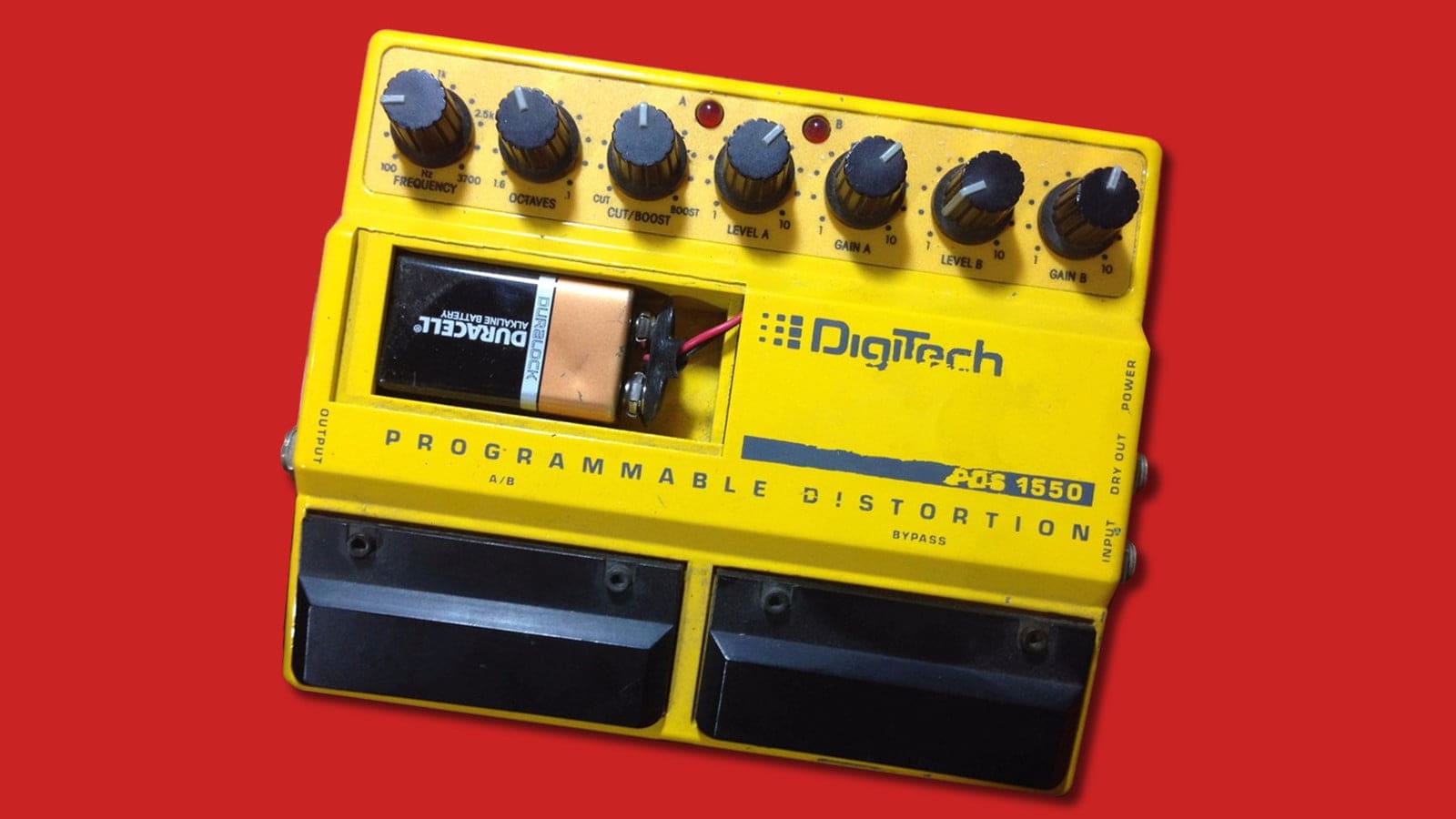
The Digitech DOD PDS-1550 was a member of the 1980’s Digitech “Dual pedal” range. It’s a pretty weird thing, and that’s partly why I’d like to take a closer look at it here. During my analysis of this pedal, I’ve discovered its dirty secret. Let’s get one thing out of the way early on though […]
Posted in BBDs+Delays, Distortion, Overdrive, and Fuzz, Stompbox stuff   35 Comments on Digitech PDS-1550 Programmable Distortion pedal analysis

One-shot Event Generator

Posted on May 28, 2018April 4, 2026

Here’s something slightly different! Is it an LFO? Is it an envelope generator? Well, it’s a bit of both. It produces a one-off event like an envelope generator, but it has a selection of waves more like an LFO. It works by producing a single “ping” when triggered. A ping is like a mini-envelope. The […]

Posted in Envelope Generators, LFOs, Projects, Stompbox stuff, Synth DIY   11 Comments on One-shot Event Generator

TAPLFO 3C – Squashing the bug

Posted on April 25, 2018January 12, 2023

We’ve discovered a bug in the recently-released TAPLFO 3 code (how embarrassing!). The problem only affects the tap tempo feature of the TAPLFO3. Other chips like the VCLFO or STOMPLFO aren’t affected. We’ve fixed the code, and while we were working on it, we also improved the switch debouncing routine to be more tolerant of bouncy […]

Posted in LFOs, Projects, Stompbox stuff   2 Comments on TAPLFO 3C – Squashing the bug

Electric Druid chips: The Next Generation

Posted on February 23, 2018February 5, 2025

In the last six months, we’ve been very busy here in the Druid workshop, developing and testing new versions of our PIC-based chips. This work is now complete, so I’d like to introduce the new chips. Why bother? What was wrong with the old ones? Ok, there wasn’t anything much wrong with the old ones, […]

Posted in Envelope Generators, LFOs, Projects, Stompbox stuff, Synth DIY   48 Comments on Electric Druid chips: The Next Generation

Flangelicious – A super-dooper flanger (Now in 2 versions!)

Posted on May 24, 2016May 20, 2026

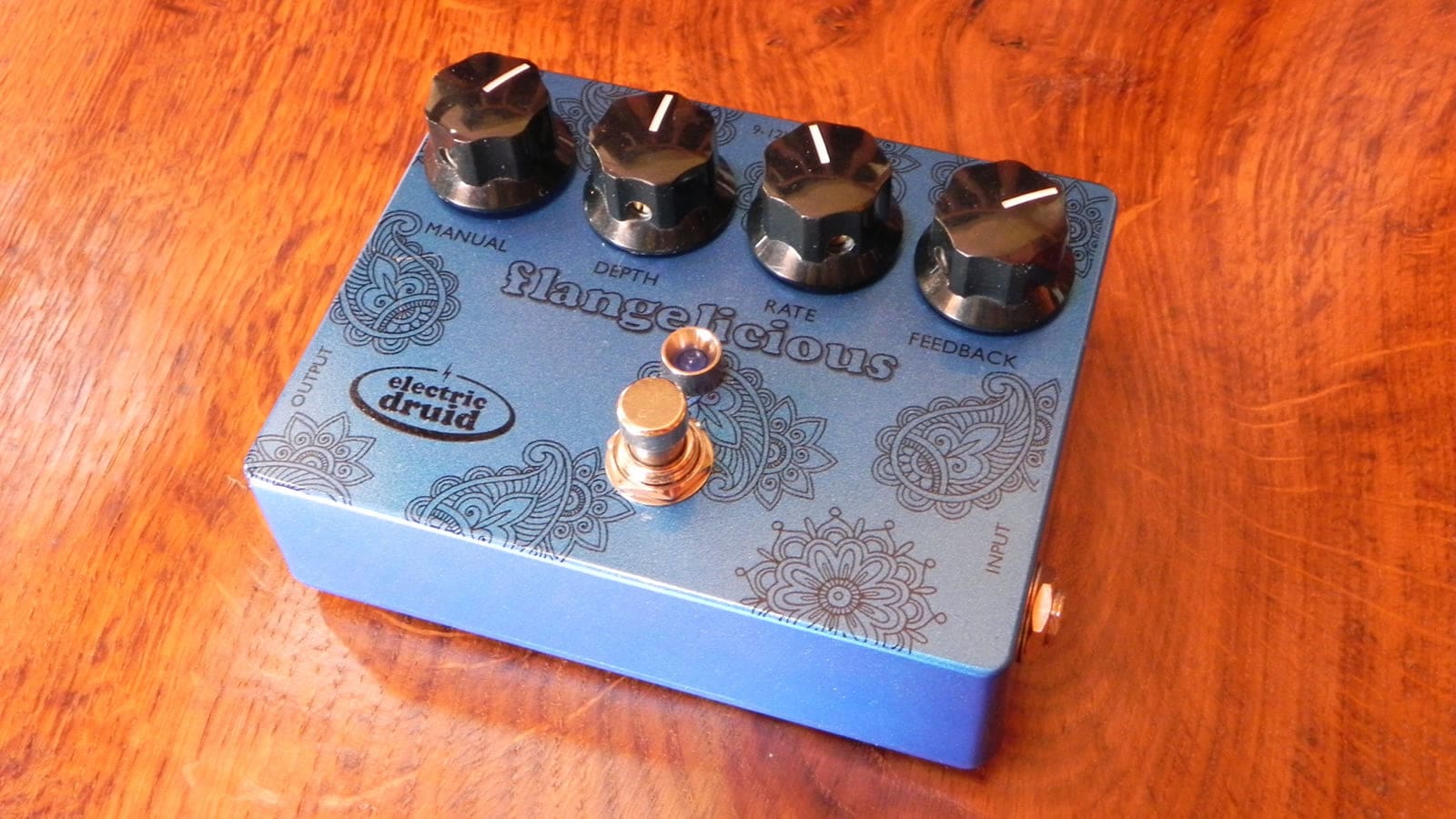
Flangers are generally regarded as one of the most complicated pedals to build. A typical design has tons of chips and lots of circuit elements. Flangelicious isn’t like that. By using a microprocessor to generate an LFO-modulated clock signal directly, we can get rid of a lot of the non-signal path stuff and add features whilst we’re about it. […]

Posted in BBDs+Delays, Flanger, Projects, Stompbox stuff   132 Comments on Flangelicious – A super-dooper flanger (Now in 2 versions!)

DIY 4 Second Digital Delay

Posted on May 9, 2016June 4, 2017

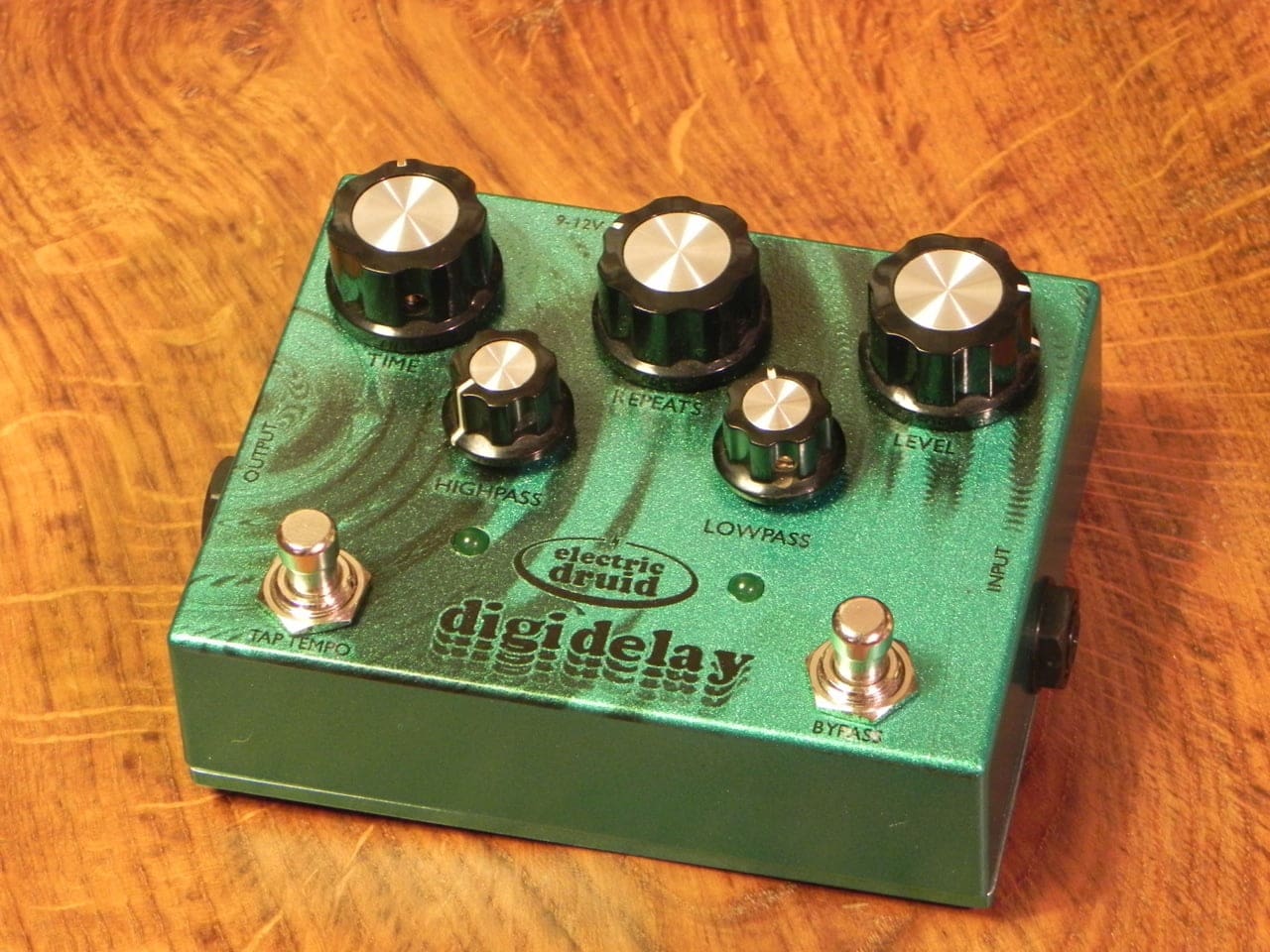
Recently I’ve been working on a four second digital delay with tap tempo and delay trails. There are lots of digital delay projects already, but the vast majority of them are based on the PT2399, which limits both the length of the delay and the sound quality.   A quick summary of the features: 0 […]

Posted in BBDs+Delays, Projects, Stompbox stuff   264 Comments on DIY 4 Second Digital Delay

Boss MT-2 Metal Zone pedal analysis

Posted on January 22, 2016March 25, 2020

The Boss MT-2 Metal Zone distortion pedal is one of the most complex drive pedals there is, and has probably the most sophisticated (and least understood!) tone control circuit on any mass-market pedal. It’s also quite a divisive beast, with some loving it, and others hating it. It’s a great pedal for modifications – easily available, […]

Posted in Distortion, Overdrive, and Fuzz, Stompbox stuff   90 Comments on Boss MT-2 Metal Zone pedal analysis

Noise Reduction with Companders

Posted on January 4, 2016January 18, 2016

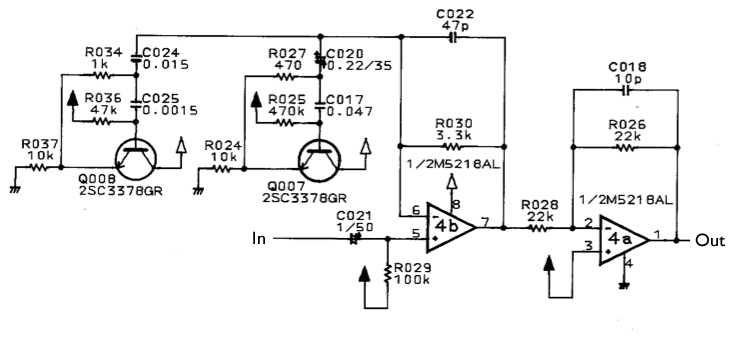
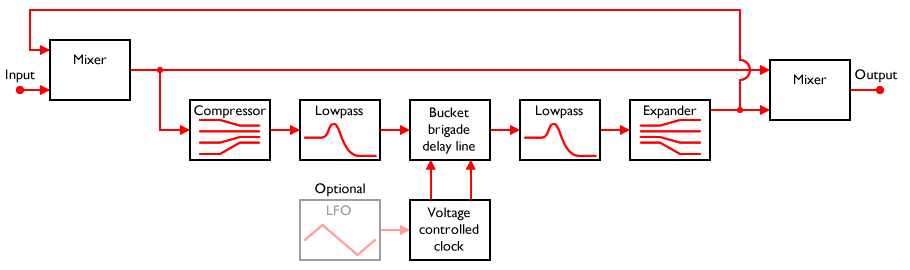
What’s a “compander”? It’s a simple way to make your circuit quieter! So how does it work? Let’s say we’ve got a fairly noisy effect, like a BBD. The basic idea is that you make quiet signals louder before you put them through the effect, and then you make them quiet again after the effect, […]

Posted in BBDs+Delays, Chorus, Flanger, Projects, Stompbox stuff   22 Comments on Noise Reduction with Companders

Investigations into what a BBD Chorus unit *really* does

Posted on June 13, 2015July 13, 2026

Update – this article has been superceded by a new one! Click here to read it! While this article was the best I could do at the time, there’s stuff here that’s factually wrong and that I’ve corrected in the new article, so go and read that one instead! However, for the sake of history I’m […]

Posted in BBDs+Delays, Chorus, Flanger, Stompbox stuff, Synth DIY   20 Comments on Investigations into what a BBD Chorus unit *really* does

Useful design equations for the PT2399

Posted on June 13, 2015October 23, 2024

The PT2399 datasheet gives some data showing the relationship between the resistor on pin 6, the clock frequency, and the delay time. Unfortunately, it doesn’t offer any design equations relating these three variables. So, can we derive some? Yes, we can! They’re all included here. First, a quick summary of what I’ve learned, if you […]

Posted in Stompbox stuff   16 Comments on Useful design equations for the PT2399

Posts navigation

Newer posts

Electric Druid

All Rights Reserved.

Comments & Feedback

If you’ve got comments, queries, or problems, please contact us. We’d love to hear your feedback about the site, our chips, and your ideas for new stuff!

Shipping

Read about our shipping policy here

Personal use

Druid code and schematics are released under a CC BY-NC-SA 4.0 license, so feel free to download and use Electric Druid code in your personal synth, pedal, or sonic blastertron 2000. Grab a copy of the schematics and tweak away to your heart’s content. If you don’t have a PIC programmer, you can order a chip from the shop. Check the legal stuff for more details.

Commercial use

Electric Druid code and schematics are released under a CC BY-NC-SA 4.0 license. Please check the legal stuff for more details. If you’d like to use Electric Druid chips, code, or circuits in your commercial product, we’d ask that you buy chips from us to help support the development of further projects. We can supply programmed, labelled chips in whatever quantities you need. If this isn’t suitable, please contact us to discuss your requirements. Thanks!