• Home
  • Shop
    • Oscillators
    • VCFs & VCAs
    • Envelope Generators
    • LFOs + Noise
    • Other synth parts
    • Stomp Boxes
  • Articles
    • Projects
    • Synth DIY
    • Stompbox stuff
    • Vintage synths
    • RC Filter Calculator
  • About Us
  • Contact
Skip to content
  • Home
  • Shop
    • Oscillators
    • VCFs & VCAs
    • Envelope Generators
    • LFOs + Noise
    • Other synth parts
    • Stomp Boxes
  • Articles
    • Projects
    • Synth DIY
    • Stompbox stuff
    • Vintage synths
    • RC Filter Calculator
  • About Us
  • Contact

Category: Synth DIY

Adding Vintage Hiss, Crackle, and Pop!

Posted on April 2, 2017April 12, 2017

In general, we’re trying to keep noise out of our circuits. Somewhat inspired by this thread on DIYStompboxes, I thought it might be fun to build a circuit that could generate that “vintage background noise” sound so that I could make things sound like they’re being played back off a phonograph cylinder or an ancient […]
Posted in Noise, Projects, Synth DIY   32 Comments on Adding Vintage Hiss, Crackle, and Pop!

Adventures in Top Octave Generation

Posted on December 11, 2016January 22, 2019

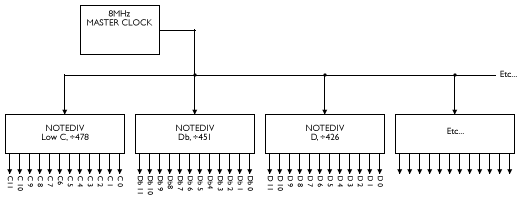
Can we make a modern reproduction of the classic top octave generator / top octave synthesiser chips of the 1970s, as used in classic string synths and combo organs? What would be involved? Can we improve on the originals in any way? This page is a summary of what I learned by doing it. A […]

Posted in Oscillators, Synth DIY, Vintage synths   38 Comments on Adventures in Top Octave Generation

Timbral Evolution: Harmonic analysis of classic synth sounds

Posted on August 30, 2016August 30, 2016

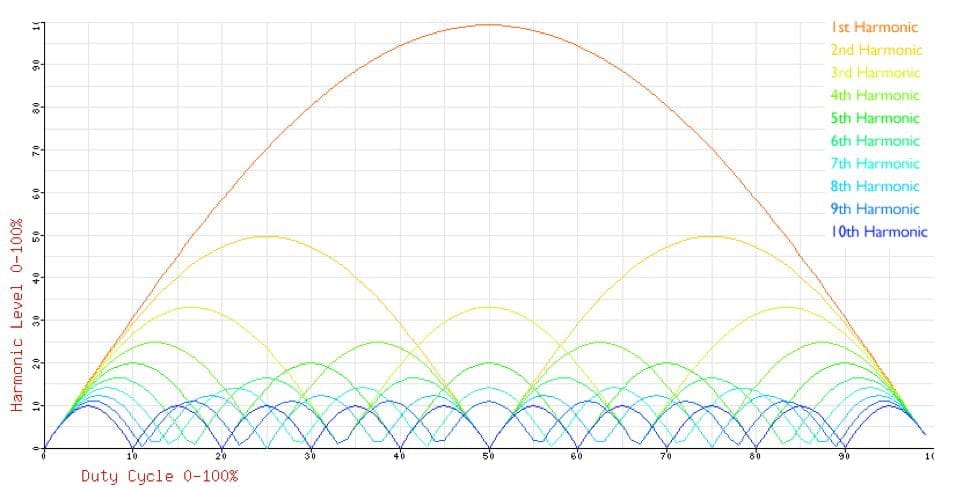
This post is a place to gather my thoughts about one of the most important parts of synthesizer design: the timbral evolution of sounds. It also presents the results of my analyses of some classic synth sounds. There have been many methods developed over the years to achieve timbral evolution. The voltage-controlled filter is the first […]

Posted in Phase Distortion, Synth DIY, Vintage synths   3 Comments on Timbral Evolution: Harmonic analysis of classic synth sounds

CEM3340 VCO (Voltage Controlled Oscillator) designs

Posted on August 27, 2016February 6, 2020

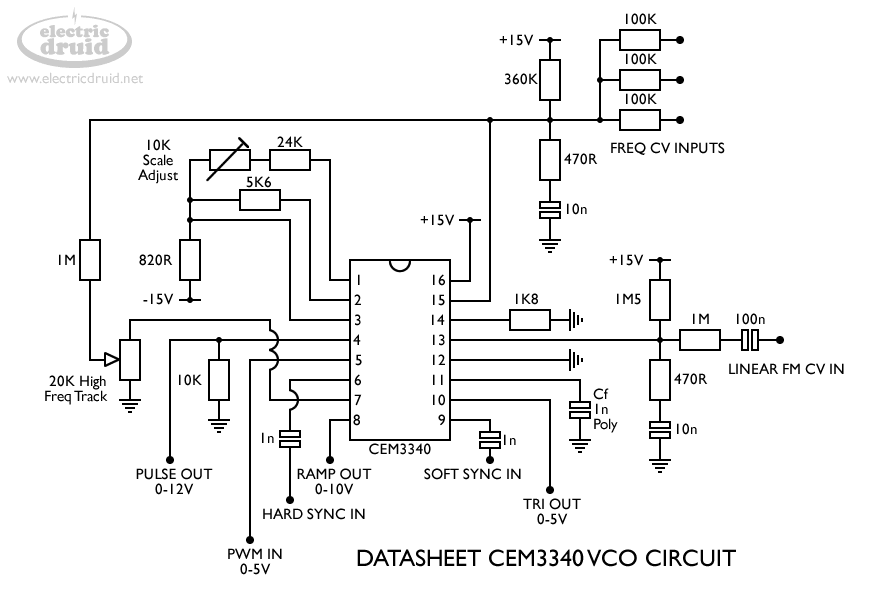
To celebrate the 2016 return of the CEM3340 chip, I thought I’d do another page in my series looking at how various synths implemented classic synth chips (the others being CEM3320 Filter designs and SSM2044 LP Filter designs). This is especially useful right now, since many people have bought a few CEM3340s or V3340s or AS3340s for their […]

Posted in Memorymoog, MKS-80, Moog, OB-Xa, Oberheim, Oscillators, Prophet 5, Prophet T8, Roland, Sequential, SH-101, Synth DIY, Vintage synths   67 Comments on CEM3340 VCO (Voltage Controlled Oscillator) designs

SH-101 replacement processor – a feasibility study

Posted on August 25, 2016August 26, 2016

The Roland SH-101 is a late-era analogue monosynth which uses a microprocessor to perform keyboard scanning and various related functions, much like the Sequential Pro-One. Since the original uP is a 40-pin DIP, it would be possible to replace it with a more modern 40-pin DIP uP, like the PIC 16F777, or with a modern […]

Posted in Roland, SH-101, Synth DIY, Vintage synths   9 Comments on SH-101 replacement processor – a feasibility study

MIDI clock to analog gate pulses

Posted on October 9, 2015November 24, 2023

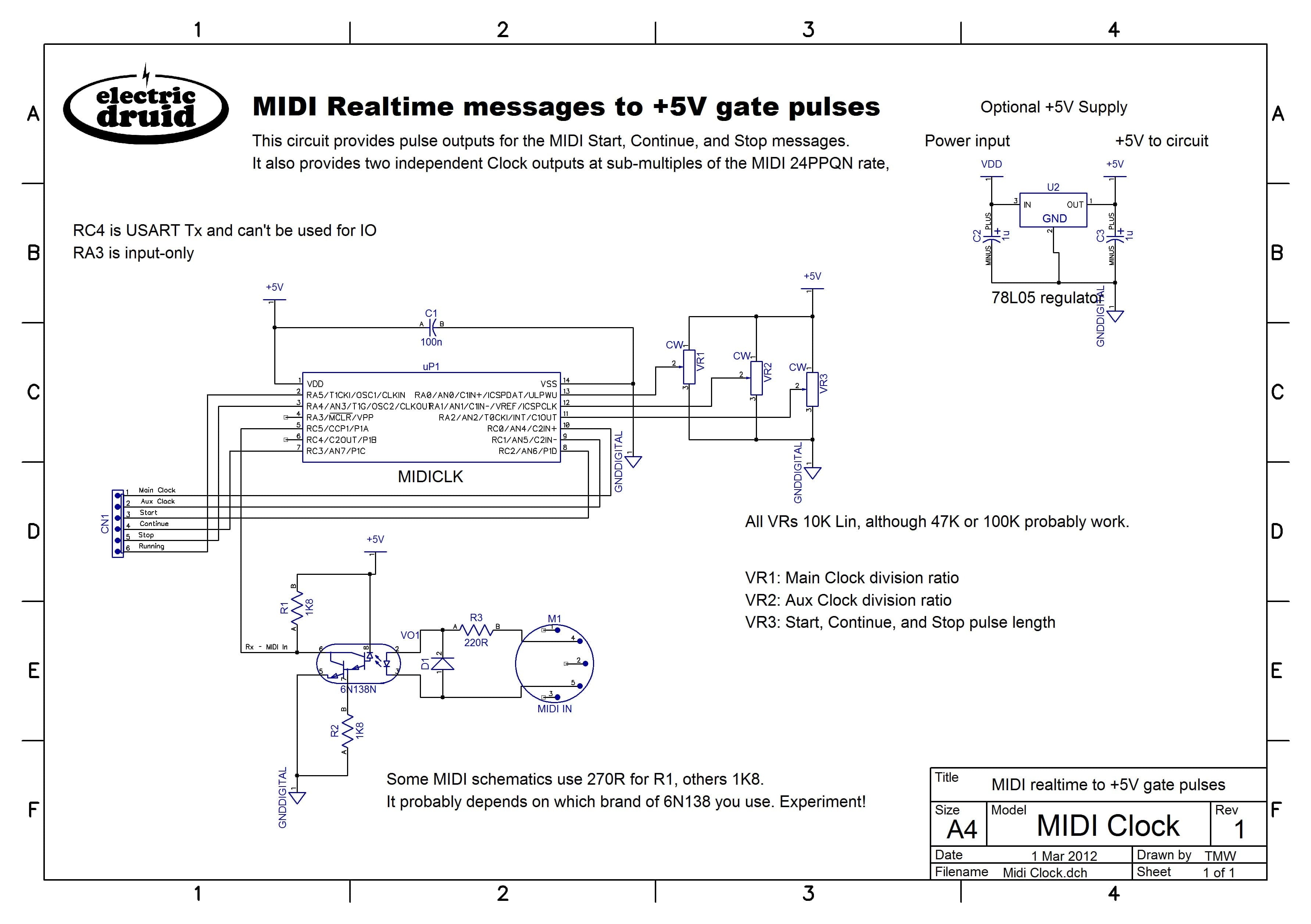
How do you synchronise your modular synth with MIDI equipment? MIDI provides the MIDI clock message, but you need something to convert this to a format an analog modular synth can understand. Most MIDI-to-CV convertors will do the job, but that can be expensive. Here’s a cheap way to do it. The Druid MIDICLK chip […]

Posted in Projects, Synth DIY   32 Comments on MIDI clock to analog gate pulses

RC Filtering for SSM2164 CVs fed from DACs

Posted on June 26, 2015August 12, 2025

I typically use the 12-bit MCP4822 DAC to produce a CV for the SSM2164 (or CoolAudio V2164, it’s the same thing) . This is a good, cheap combination. However, the 4822 produces an output of 0-4.095V, whereas the 2164 needs 0-3.3V. It is possible to use a simple voltage divider to reduce the voltage to […]

Posted in Filters, Synth DIY, VCAs + Amplifiers   Leave a Comment on RC Filtering for SSM2164 CVs fed from DACs

Investigations into what a BBD Chorus unit *really* does

Posted on June 13, 2015July 13, 2026

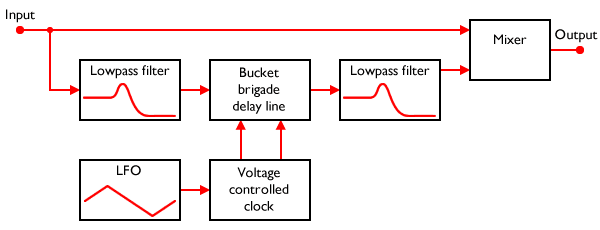
Update – this article has been superceded by a new one! Click here to read it! While this article was the best I could do at the time, there’s stuff here that’s factually wrong and that I’ve corrected in the new article, so go and read that one instead! However, for the sake of history I’m […]

Posted in BBDs+Delays, Chorus, Flanger, Stompbox stuff, Synth DIY   20 Comments on Investigations into what a BBD Chorus unit *really* does

Fourier Analysis for non-mathematicians

Posted on June 13, 2015February 10, 2016

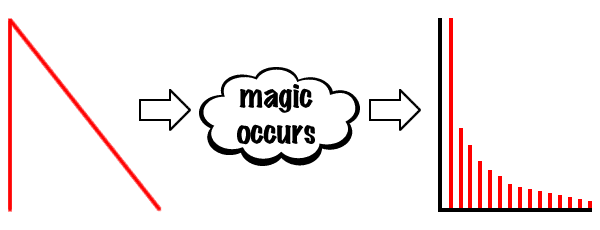
Years ago, I discovered that it was possible to analyze a waveform and discover what harmonic components it was composed of, and that the magical technique to do this was called “Fourier Analysis”. I tried to find out all I could, but all the references I could find were aimed at university level mathematicians, and […]

Posted in Synth DIY   9 Comments on Fourier Analysis for non-mathematicians

Single VCA crossfader

Posted on June 9, 2015September 2, 2015

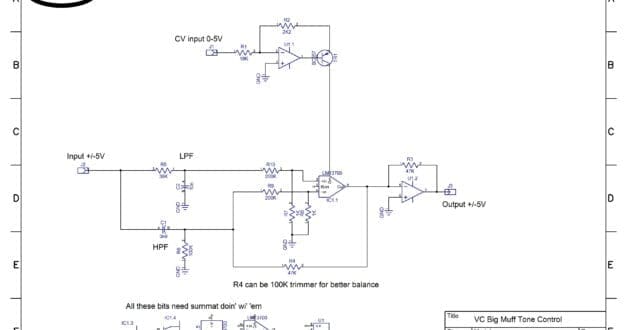
There are a number of situations where it is useful to be able to crossfade between two different signals with a single control. Examples might be a wet/dry control on a delay effect, or a waveform knob on an oscillator that goes from ramp to square continuously. The simple and obvious way to do this […]

Posted in Projects, Synth DIY, VCAs + Amplifiers   34 Comments on Single VCA crossfader

Posts navigation

Older posts
Newer posts

Electric Druid

All Rights Reserved.

Comments & Feedback

If you’ve got comments, queries, or problems, please contact us. We’d love to hear your feedback about the site, our chips, and your ideas for new stuff!

Shipping

Read about our shipping policy here

Personal use

Druid code and schematics are released under a CC BY-NC-SA 4.0 license, so feel free to download and use Electric Druid code in your personal synth, pedal, or sonic blastertron 2000. Grab a copy of the schematics and tweak away to your heart’s content. If you don’t have a PIC programmer, you can order a chip from the shop. Check the legal stuff for more details.

Commercial use

Electric Druid code and schematics are released under a CC BY-NC-SA 4.0 license. Please check the legal stuff for more details. If you’d like to use Electric Druid chips, code, or circuits in your commercial product, we’d ask that you buy chips from us to help support the development of further projects. We can supply programmed, labelled chips in whatever quantities you need. If this isn’t suitable, please contact us to discuss your requirements. Thanks!